



The Ultimate Guide to Floating Shelves: Character, Craftsmanship, and Quality
What are Floating Shelves and Why Choose Reclaimed Timber?
A floating shelf is a minimalist storage solution celebrated for its clean, architectural lines. With no visible brackets or supports, it appears to emerge seamlessly from the wall, creating an illusion of space and light. This elegant effect makes it a favourite in modern and traditional British homes alike, from compact city flats to period properties with charming alcoves.
But a true floating shelf is more than just a look; it’s about substance. Whilst many mass-produced options use hollow cores or composite materials, we believe the finest shelves are crafted from solid, reclaimed timber. Choosing wood with a history, such as sustainably sourced Scandinavian pine, brings a warmth and character into your home that new materials simply cannot replicate. Each piece tells a story through its unique grain, nail holes, and saw marks—the beautiful imperfections of a life already lived. This not only adds authentic soul to your decor but also represents an environmentally conscious choice, giving venerable timber a new purpose.
The Character of Reclaimed Wood
- A Unique Story: The ageing process gives reclaimed pine a deep, rich colour and a tactile texture that is impossible to fake. No two handcrafted shelves are ever identical.
- Visual Appeal: The "floating" effect offers a clean, uncluttered alternative to traditional bracketed shelves, making rooms feel larger and more organised.
- Sustainable Choice: Opting for reclaimed materials reduces waste and the demand for new timber, lowering the carbon footprint of your interior design choices.
The Anatomy of a High-Quality Floating Shelf
When choosing a floating shelf, the quality of its construction is paramount. The difference between a shelf that becomes a permanent, reliable feature and one that sags after a year lies in the materials and the engineering hidden within.
Solid Timber vs. Composite Materials
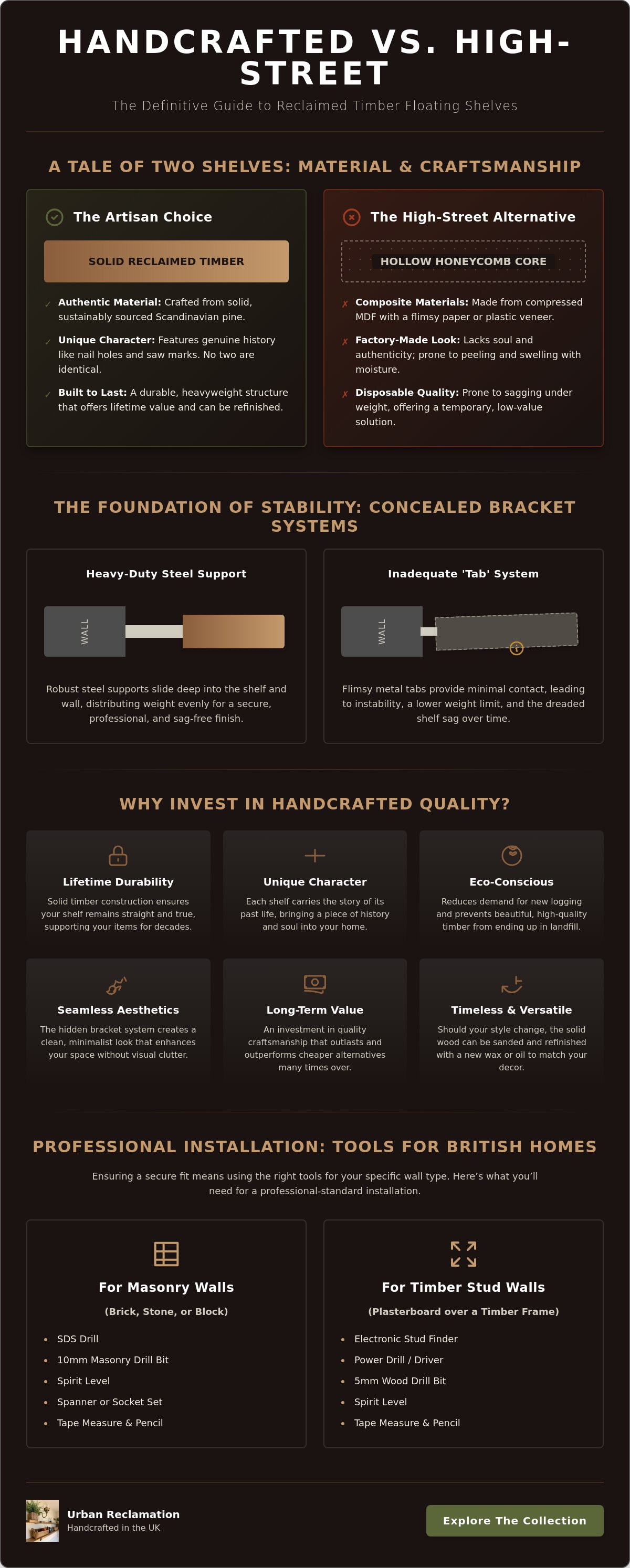
The core of any shelf determines its strength and longevity. Many affordable shelves are made from honeycomb paper, chipboard, or MDF wrapped in a thin veneer. Whilst lightweight, these materials are prone to sagging, swelling with moisture, and peeling over time. Once damaged, they are almost impossible to repair.
Solid reclaimed timber, by contrast, is a dense, robust material with immense structural integrity. It can bear significant weight—perfect for a collection of hardback books or heavy kitchen ceramics—without bowing. Its substantial feel and authentic grain provide a tactile and visual quality that composites cannot match. Furthermore, solid wood can be sanded and re-finished years down the line, adapting to your changing style and ensuring it lasts for decades, not just a few seasons.
The Importance of Heavy-Duty Hidden Brackets
The magic of a floating shelf lies in its concealed support system. A high-quality shelf uses a heavy-duty steel bracket with solid rods that slide into precisely drilled holes in the back of the timber. The strength of this bracket is what dictates the shelf’s weight capacity and ensures it sits securely against the wall.
It’s crucial to match the bracket and its fixings to your wall type. Solid masonry walls (brick or block) provide the most secure anchor for heavy loads. Plasterboard or stud walls require specific fixings that anchor into the wooden studs behind the board to provide the necessary support. Always ensure the provided brackets are suitable for your wall, as this is the key to a safe and lasting installation.
Practical Guidance: Installation, Weight, and Styling
With the right preparation, installing solid wood floating shelves is a straightforward DIY task that yields professional results. Here’s our guidance on getting it right and making your shelves a beautiful, functional part of your home.
Step-by-Step Installation Basics
Before you begin, ensure you have the right tools: a spirit level, a pencil, a tape measure, a drill, and the correct drill bit for your wall type. For those looking to invest in high-quality equipment for this and future projects, New Local Tools offers a range of professional-grade power tools. A stud finder is also essential for plasterboard walls.
- Mark Your Position: Hold the shelf against the wall and decide on the perfect height. Use your spirit level to mark a faint, perfectly horizontal pencil line where the top of the shelf will sit. Mark the centre points for your bracket holes along this line.
- Drill with Precision: Using the correct drill bit, drill the holes for your wall plugs. Ensure you drill straight and to the depth required by the fixings. Gently tap the wall plugs in until they are flush with the surface.
- Fit the Bracket: Screw the concealed bracket firmly to the wall. Use your spirit level one last time to double-check it is perfectly level before fully tightening the screws.
- Mount the Shelf: Carefully slide the shelf onto the steel support rods. It should be a snug, secure fit. Your shelf is now ready to be styled.
Styling Your Shelves in the British Home
A well-styled shelf is a joy to behold. It should feel curated and personal, not cluttered. Here are a few ideas for integrating floating shelves into classic British interiors:
- Organising Alcoves: In period properties, floating shelves are the perfect solution for alcoves flanking a fireplace. They provide beautiful, symmetrical storage for books, photos, and treasured objects without the bulk of a full cabinet.
- The Kitchen Larder Shelf: Use a chunky floating shelf in the kitchen to display beautiful ceramics, jars of dried goods, and your favourite cookbooks. It keeps worktops clear whilst adding rustic warmth. It is also the perfect spot for a home coffee station, where you can display artisan beans from theroasthauscoffeeco.com alongside your morning essentials.
- The Rule of Three: When arranging decorative items, group them in odd numbers, particularly threes. Vary the height and texture of the objects—for example, a small plant, a stack of books, and a ceramic vase—to create a balanced, visually interesting display.
Maintenance and Care
Caring for reclaimed wood is simple. Our shelves are finished with natural waxes that protect the timber whilst allowing it to breathe. To clean, simply wipe with a soft, dry cloth. Avoid harsh chemical sprays, which can strip the wax finish. To maintain its deep lustre, your shelf can be re-waxed every few years with a clear or coloured wax polish, a simple process that will keep it looking beautiful for a lifetime.
The Urban Reclamation Difference: Handcrafted in the UK
In a world of mass-produced, disposable furniture, we stand for something different. At our Derbyshire workshop, nestled in the Peak District, we believe that furniture should have soul. Our passion is transforming reclaimed Scandinavian pine, rich with history, into beautiful, functional pieces for your home.
Every floating shelf we create is a testament to traditional craftsmanship. We carefully select each piece of timber, celebrating the unique knots, grains, and marks that make it one-of-a-kind. The wood is then painstakingly sanded and finished by hand with high-quality waxes, a process that honours the material and brings out its inherent warmth. This commitment to quality over convenience is at the heart of everything we do.
We take immense pride in our work, from the first cut of the timber to the moment your shelf is safely packaged and sent on its journey to you. Seeing our handcrafted pieces become a cherished part of homes across the country is our greatest joy. When you choose Urban Reclamation, you are not just buying a shelf; you are investing in a piece of British craftsmanship, built with passion and made to last.
Explore our range of handcrafted floating shelves and bring the timeless character of reclaimed wood into your home.
Frequently Asked Questions
Can floating shelves be installed on plasterboard walls?
Yes, but it is crucial to fix the brackets directly into the wooden studs behind the plasterboard for adequate support. Using standard plasterboard plugs is not recommended for heavy solid wood shelves, as they will not hold the weight securely.
How much weight can a solid wood floating shelf hold?
The weight capacity depends on the shelf's dimensions, the quality of the brackets, and, most importantly, the type of wall it is fixed to. When installed correctly into a solid masonry wall, our heavy-duty shelves can typically hold between 20-35kg.
What is the best wood for floating shelves?
For a blend of character, strength, and sustainability, we believe reclaimed pine is an excellent choice. Its aged, dense grain provides fantastic durability, whilst its history adds a unique rustic charm that new wood lacks.
Are floating shelves difficult to put up?
With basic DIY skills and the right tools, installing floating shelves is a manageable project. The key is careful measurement and ensuring the bracket is perfectly level before mounting the shelf.
How do you clean and maintain reclaimed wood shelves?
Simply dust with a soft, dry cloth for regular cleaning. Avoid liquid polishes or harsh chemical cleaners. To restore the finish after a few years, you can apply a light coat of natural furniture wax.
What depth should a floating shelf be for books?
A depth of around 22cm (approximately 9 inches) is ideal for most paperbacks and hardbacks, providing ample support without protruding too far from the wall.
Do floating shelves come with brackets included?
Yes, all our floating shelves are supplied with the appropriate heavy-duty concealed brackets and fixings for solid walls.
How do I choose the right colour wax for my room?
Consider your existing decor. A lighter wax like 'Natural' or 'Stripped Pine' works well in minimalist or Scandinavian-style rooms, whilst a darker 'Jacobean Oak' or 'Walnut' finish adds drama and complements traditional interiors.